LEAD-ACID BATTERY RECYCLING LINE
Lead-Acid Battery Recycling Line
Lead-acid batteries still hold significant market share in automotive start-stop, telecom base stations, and industrial backup power applications, with continuously increasing volumes of retired batteries. Non-standard disassembly and crude smelting not only waste lead resources but also pose serious environmental and health risks. Yunning Recycling provides clients with lead-acid battery recycling lines that comply with local environmental and safety regulations, from front-end crushing & sorting to back-end smelting and waste treatment, helping clients transition from traditional "high-pollution, high-risk" models to "clean, safe, compliant" modern recycling facilities.
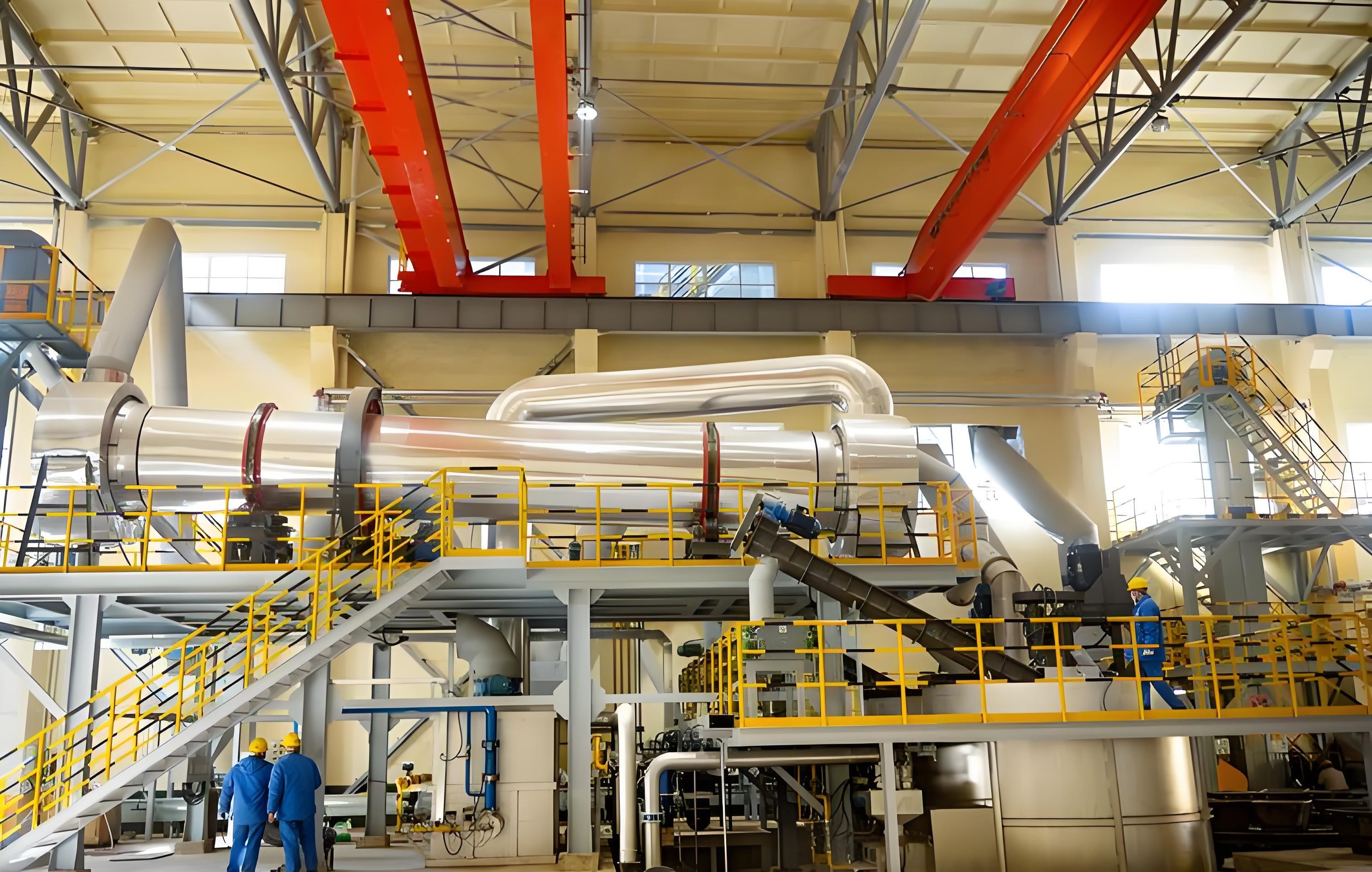
Process Route & System Overview
A spent lead-acid battery recycling line typically consists of crushing & sorting, lead paste pre-desulfurization, smelting & refining, and EHS systems. Through systematic design addressing front-end material conditions, sulfur-containing lead paste characteristics, and emission boundaries, we achieve a complete production line from incoming batteries to qualified lead ingots and compliant waste emissions.
Crushing & Sorting System
The lead-acid battery crushing & sorting system targets "high recovery rate, low entrainment, stable continuous operation." The process is typically organized as enclosed feeding - controlled crushing - multi-stage sorting - material routing. After feeding and pre-treatment, spent batteries enter the crushing unit with enclosed and interlocked controls to reduce acid mist and lead dust escape risks. The crushed mixture enters the sorting section where screening/washing (or hydraulic sorting) achieves initial separation of electrolyte and fine particles, followed by multi-stage routing and purification of lead paste, lead grids, plastics, and separators/impurities based on physical property differences, providing cleaner, more uniform feedstock for subsequent smelting and resource utilization.
View DetailsLead Paste Pre-Desulfurization System
The lead paste pre-desulfurization system addresses sulfur-containing lead paste feedstock using ammonium or sodium-based pre-desulfurization routes to transfer sulfate components into the solution phase, achieving "solid-liquid separation - solution purification - sulfate crystallization recovery" closed-loop processing. Pre-desulfurized lead paste proceeds to subsequent smelting/refining or regeneration stages, while the solution side enters sulfate solution purification and crystallization units to recover storable, usable solid by-products, with mother liquor recycled as needed or sent to subsequent treatment systems.
View DetailsSmelting & Refining System
The smelting and refining ingot casting system targets "stable production of qualified lead ingots," receiving pre-treated lead paste, lead grids, and other lead-containing materials. Through smelting - crude lead processing - refining and impurity removal - composition adjustment - ingot casting, metal recovery and product formation are achieved. Materials complete metal phase and slag phase separation in the smelting unit, crude lead enters the refining section for stepwise impurity removal with composition fine-tuning and temperature stabilization, finally cast into ingot form for convenient transportation and trade delivery.
View DetailsEHS System
Addressing dust-laden, acidic flue gas from high-temperature smelting/refining processes, the EHS system is configured following "pre-separation - cooling - fine dust removal - desulfurization - induced draft emission" routes: cyclone separation and cooling towers reduce dust and temperature loads, pulse bag filters efficiently capture fine lead dust particles, desulfurization towers absorb SO2 and other acidic components, with induced draft fans maintaining system-wide negative pressure for compliant emissions. Complementary lead-containing wastewater treatment and solid waste safe disposal units provide systematic assurance for plant-wide emission boundaries and long-term compliant operation.
View Details